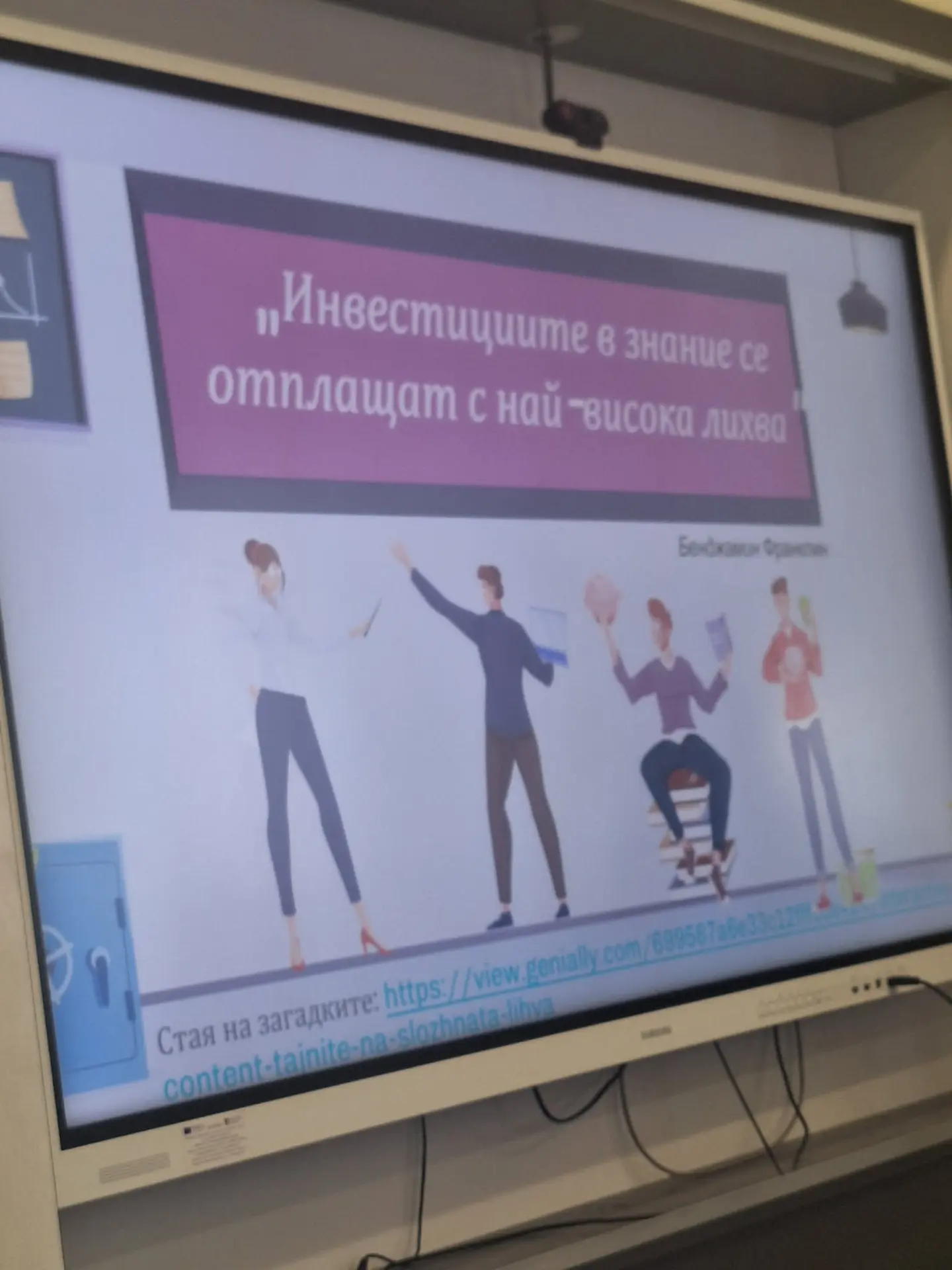
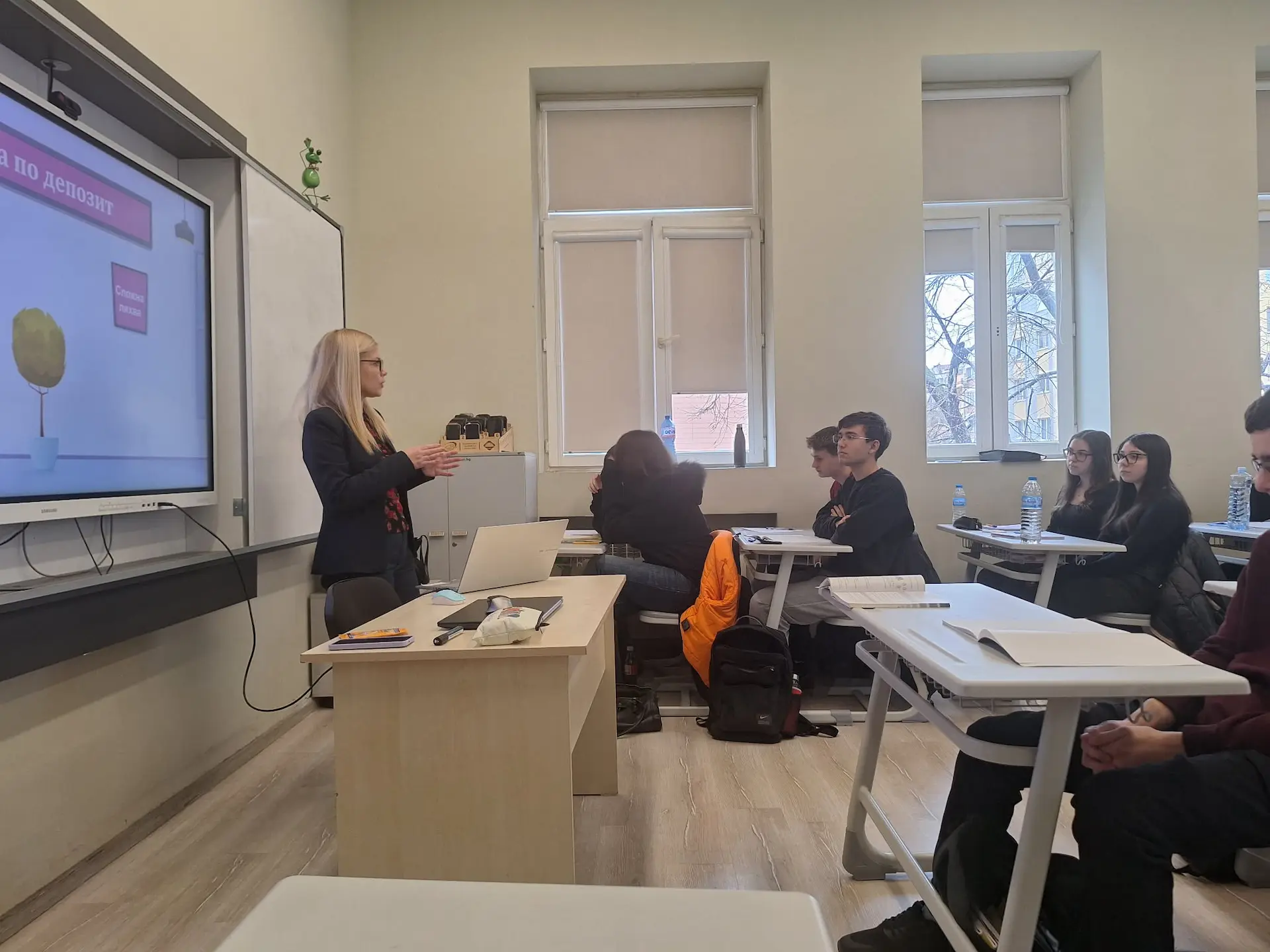
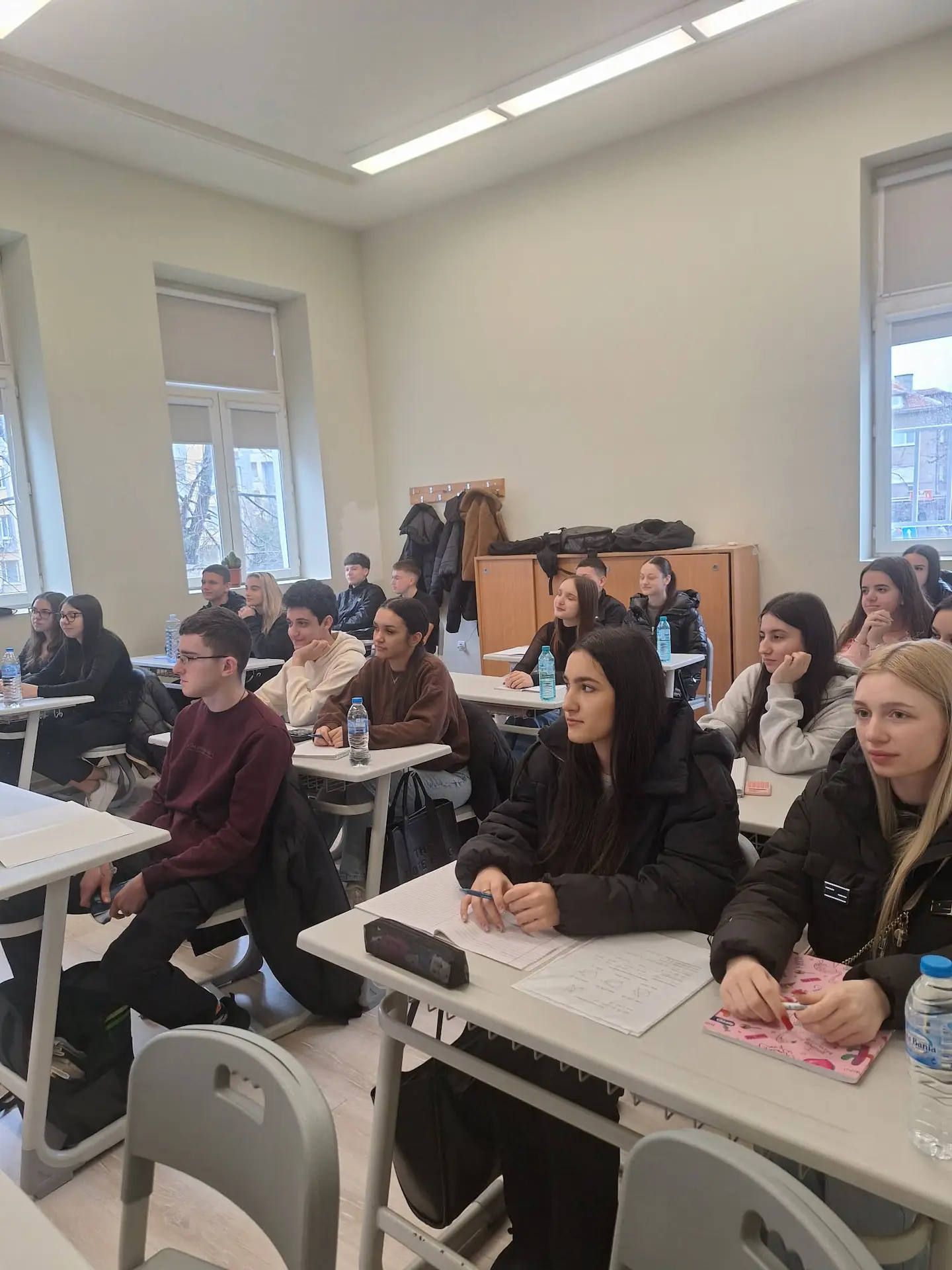
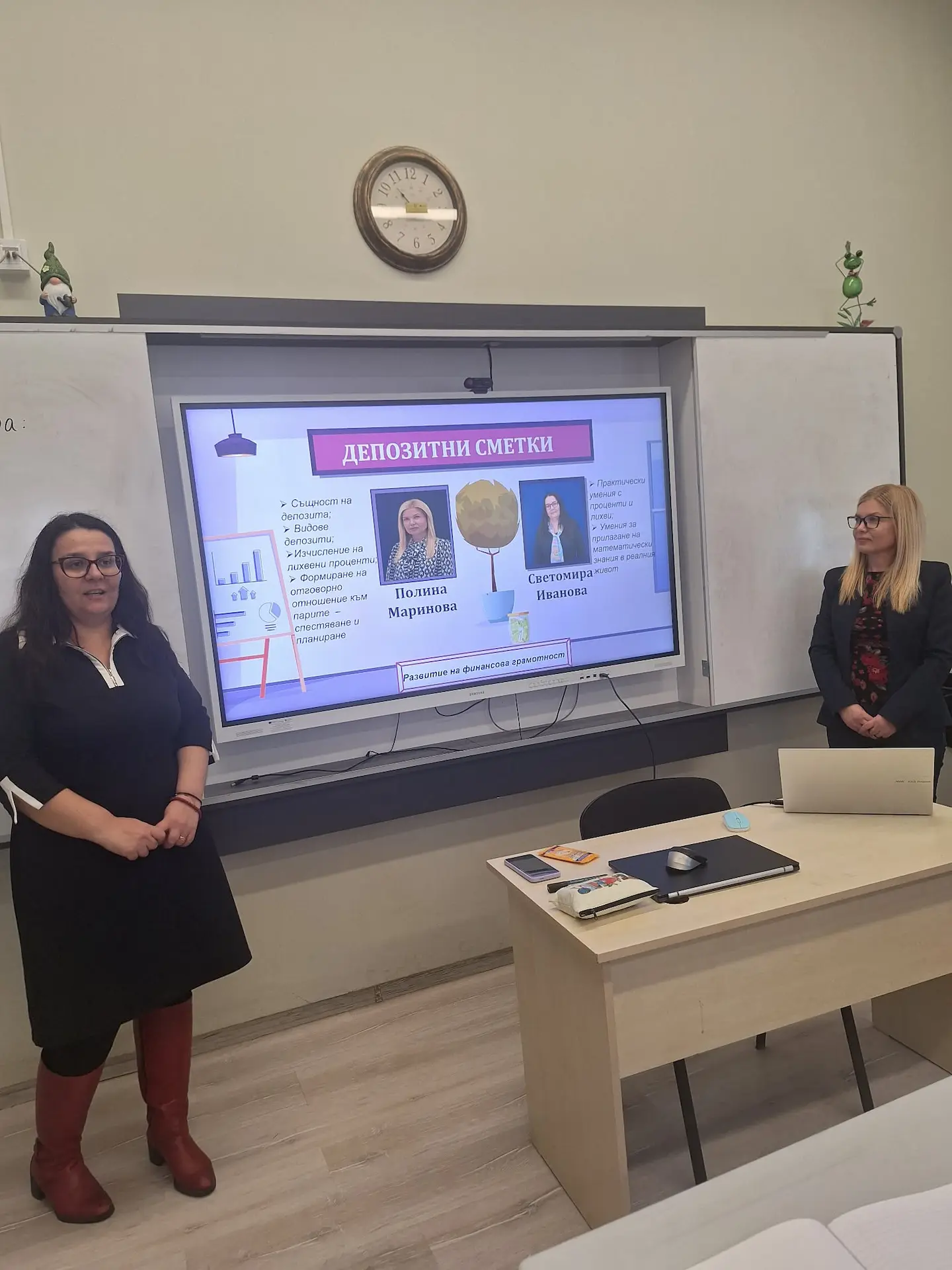
The lesson was built on a clear structure and sequence, followed through a presentation that introduced students to the essence of deposits – from their emergence to their modern forms. The main types of deposits were examined, as well as the conditions under which they are opened, which gave a comprehensive idea of how banking products function.
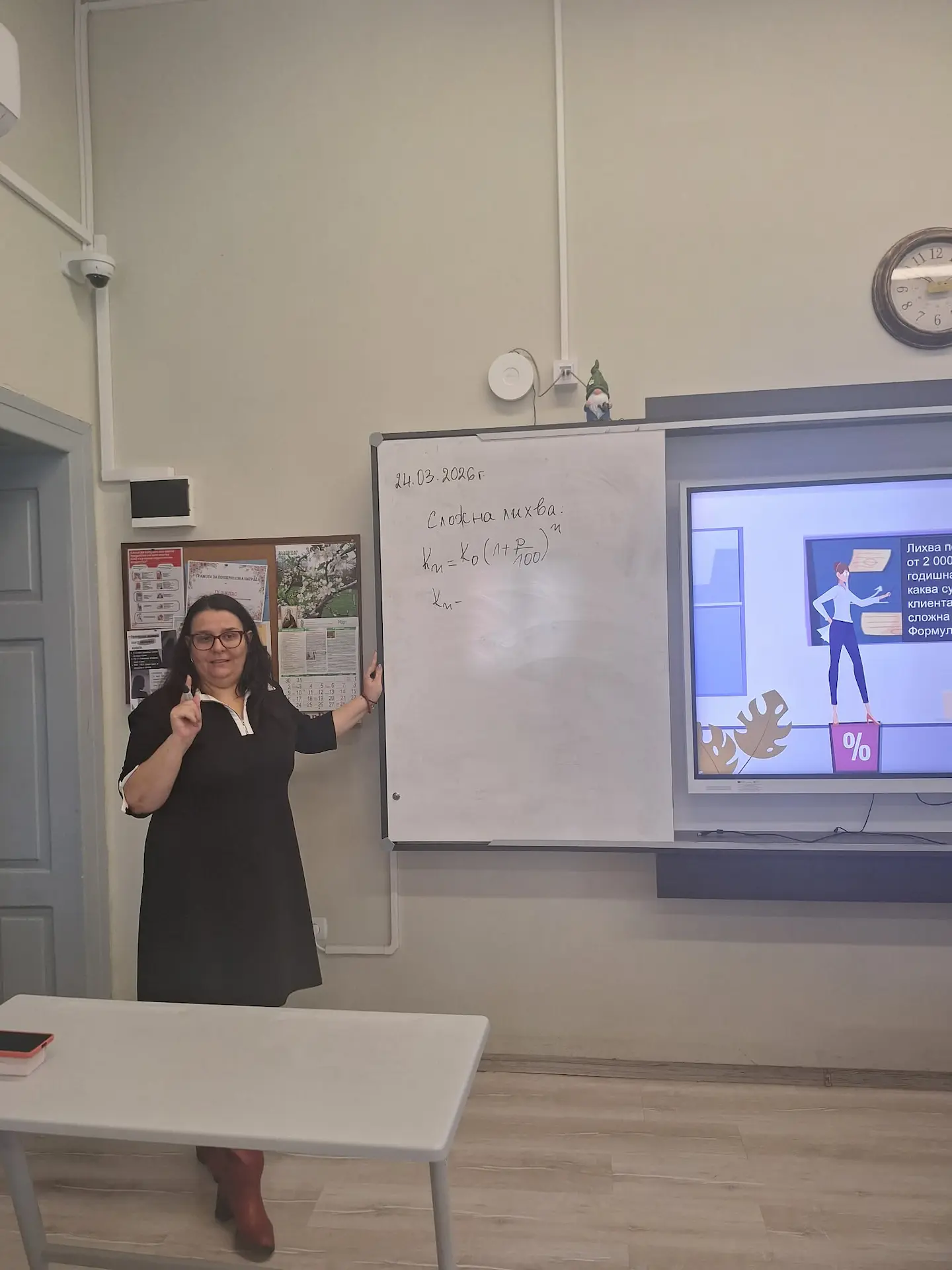
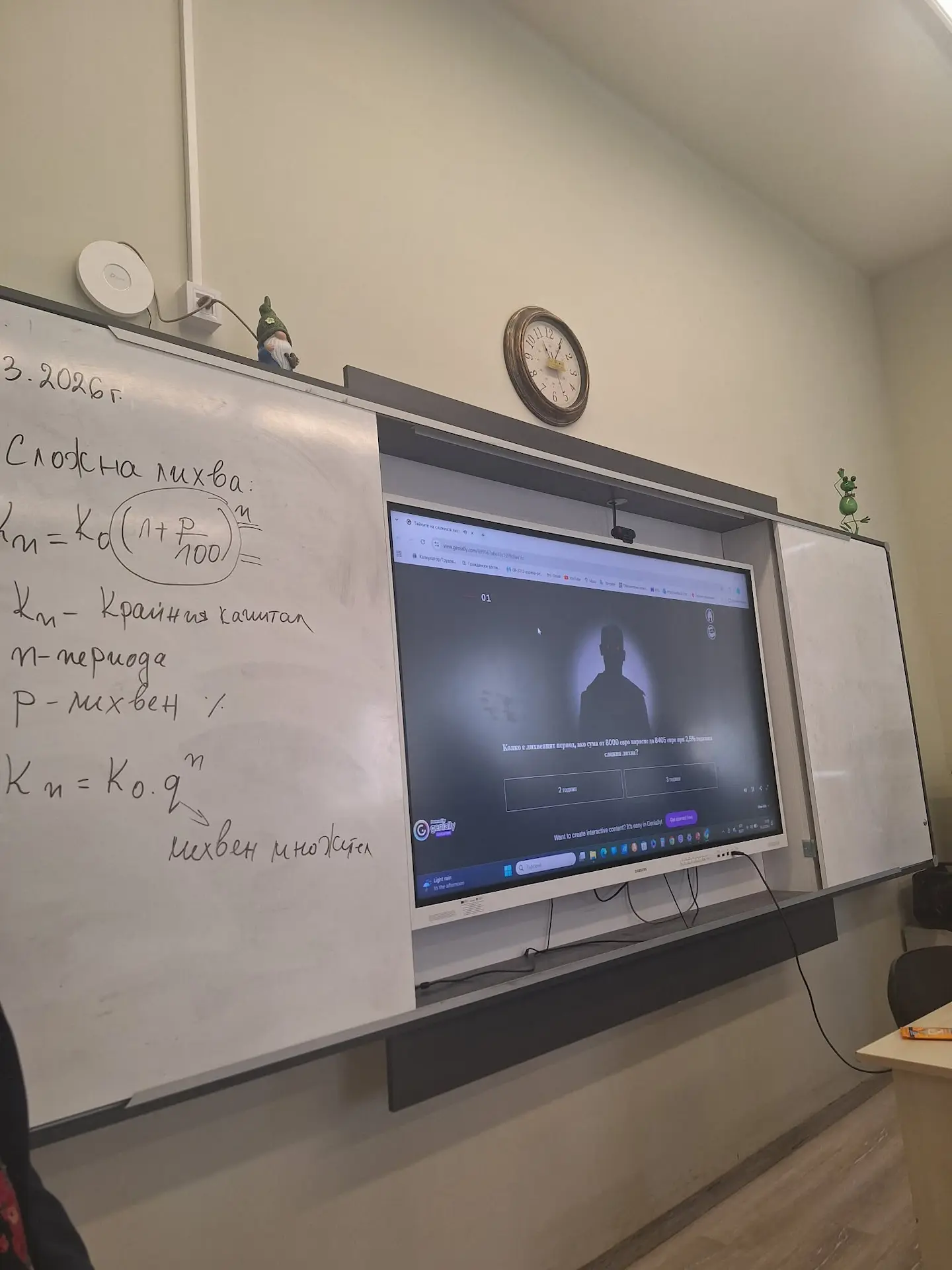
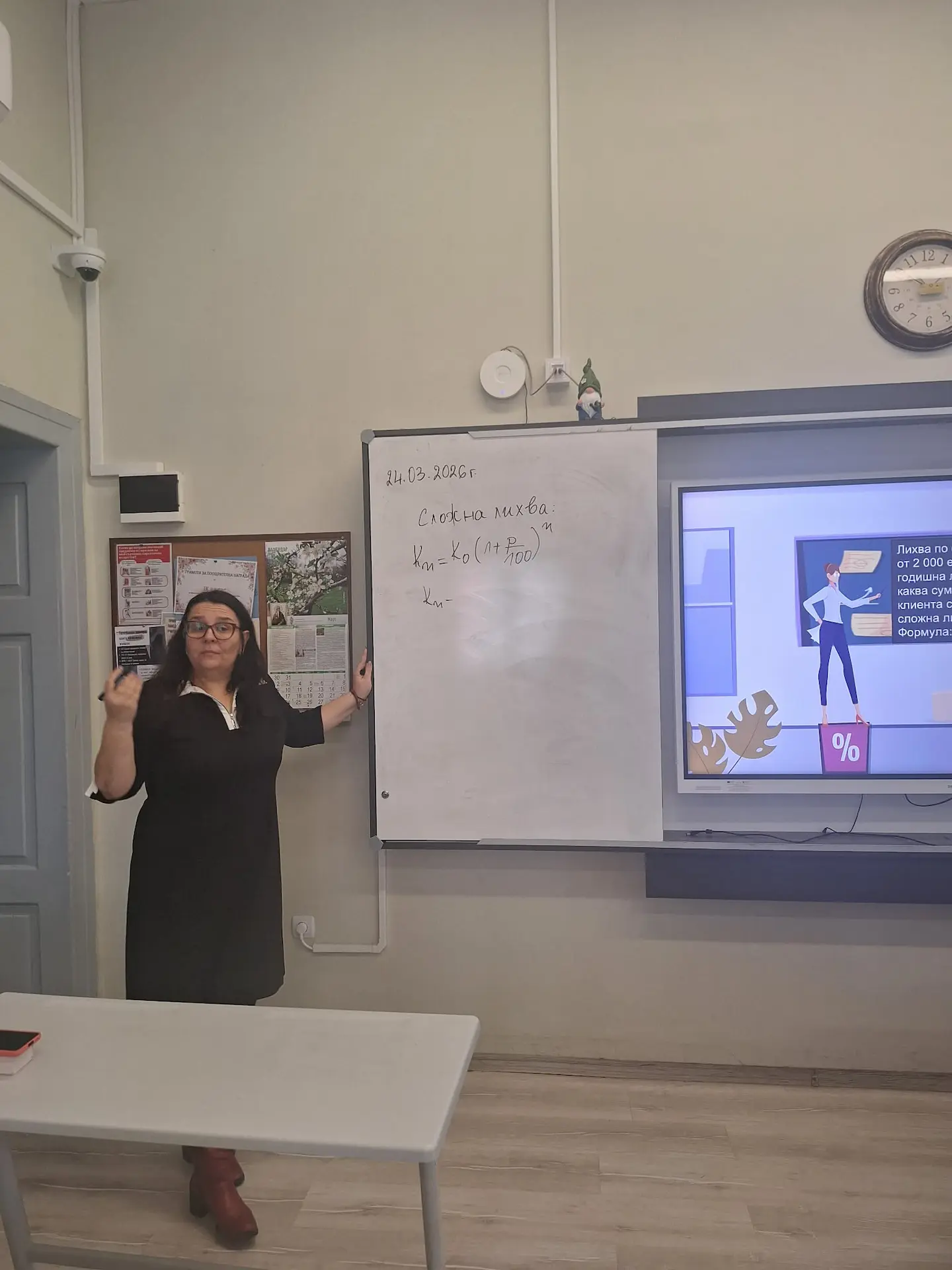
The main emphasis was placed on interest – simple and compound. Through specific examples and calculations, the students saw how returns are generated and how the same amount can grow in different ways over time. In this way, mathematical knowledge moved beyond the textbook and became a tool for understanding real financial processes.
It was evident that serious preparatory work stood behind the lesson. Ms. Marinova, a practical training teacher, and Ms. Ivanova, a mathematics teacher, led the class calmly and confidently, with each next step naturally building on the previous one. The content was arranged so that students would not lose track – the topic developed gradually, with clear examples and logic.
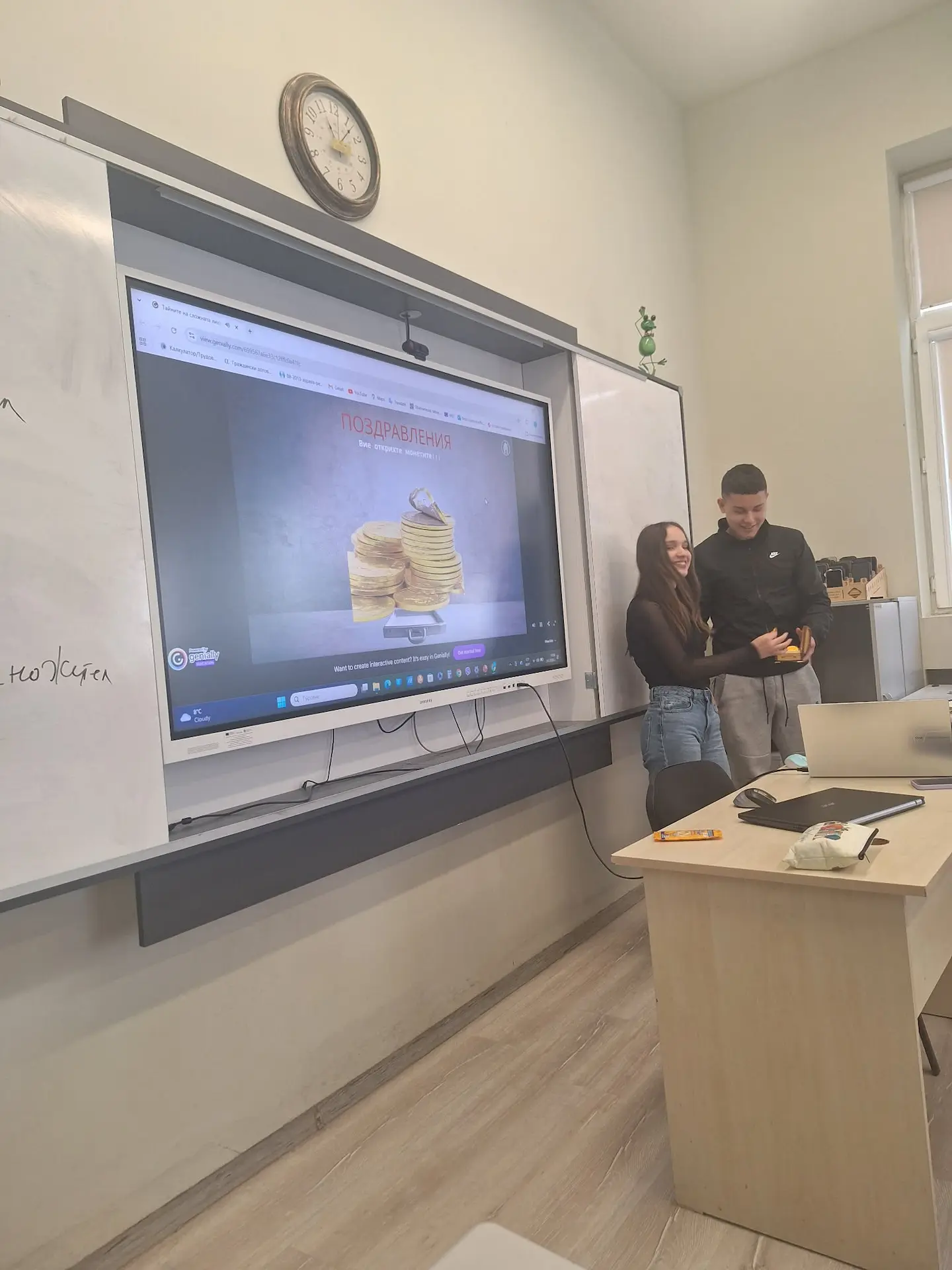
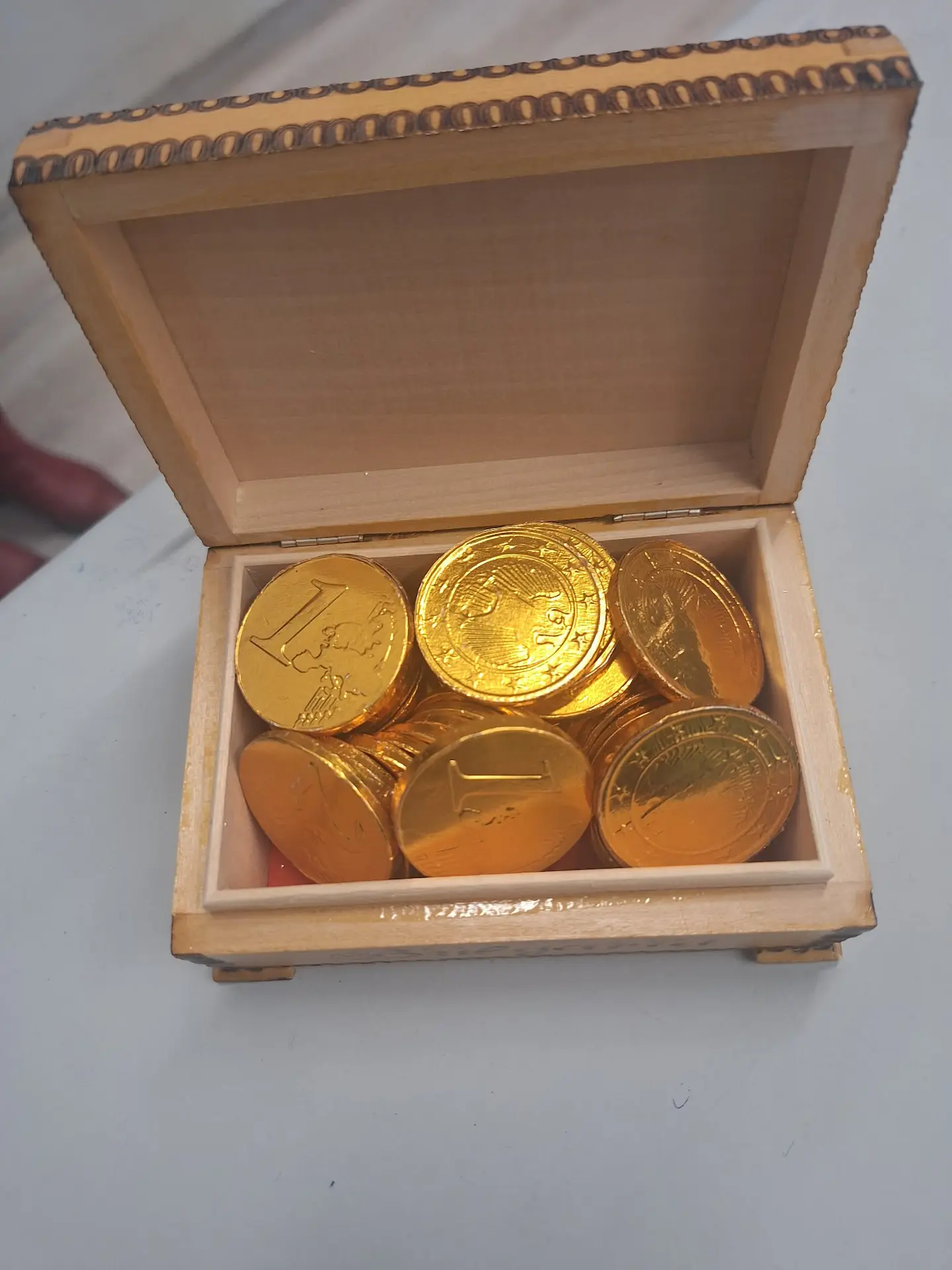
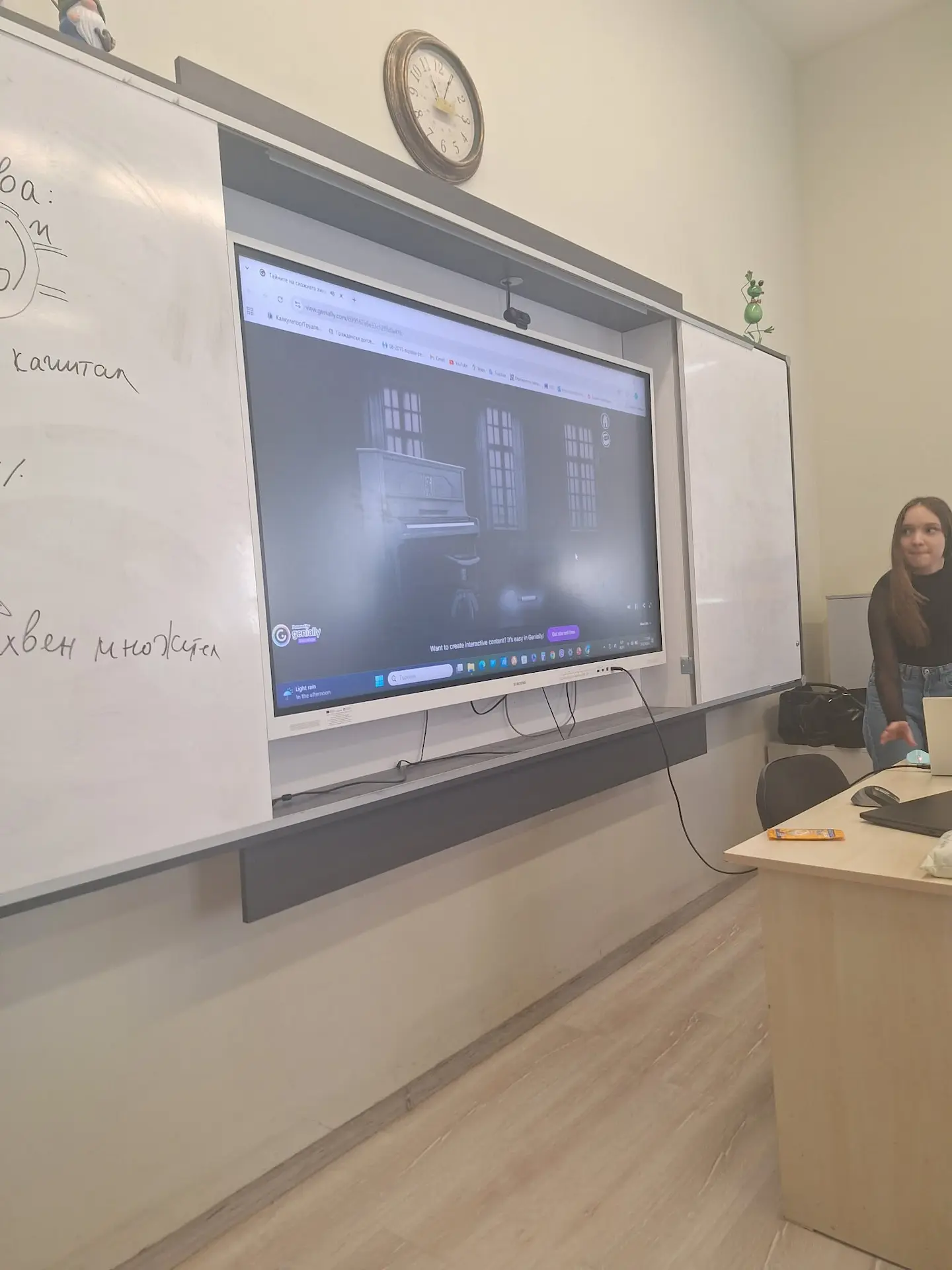
The second part of the lesson took place in a different format – through gamification. The digital financial game related to compound interest actively engaged the students and placed them in a situation where they had to make decisions and apply what they had learned. In searching for the correct answers, they gradually reached the final goal – a “treasure”, which turned out to be a chest of gold coins… in fact, chocolate candies. The smiles at the end showed that learning can also be an experience.
This lesson, in which numbers came out of the notebooks and entered real-life situations, showed how important it is for knowledge to have context. When students see the meaning, they begin to think and make connections.
The topic of money was presented not as abstract theory, but as a skill that will increasingly matter to them.