"Bulgarian Christmas" at NTG – a celebration of roots, rhythm, and memory
The festive program by the Trade High School students showed that folklore remains relevant—not as a ritual, but as living culture.
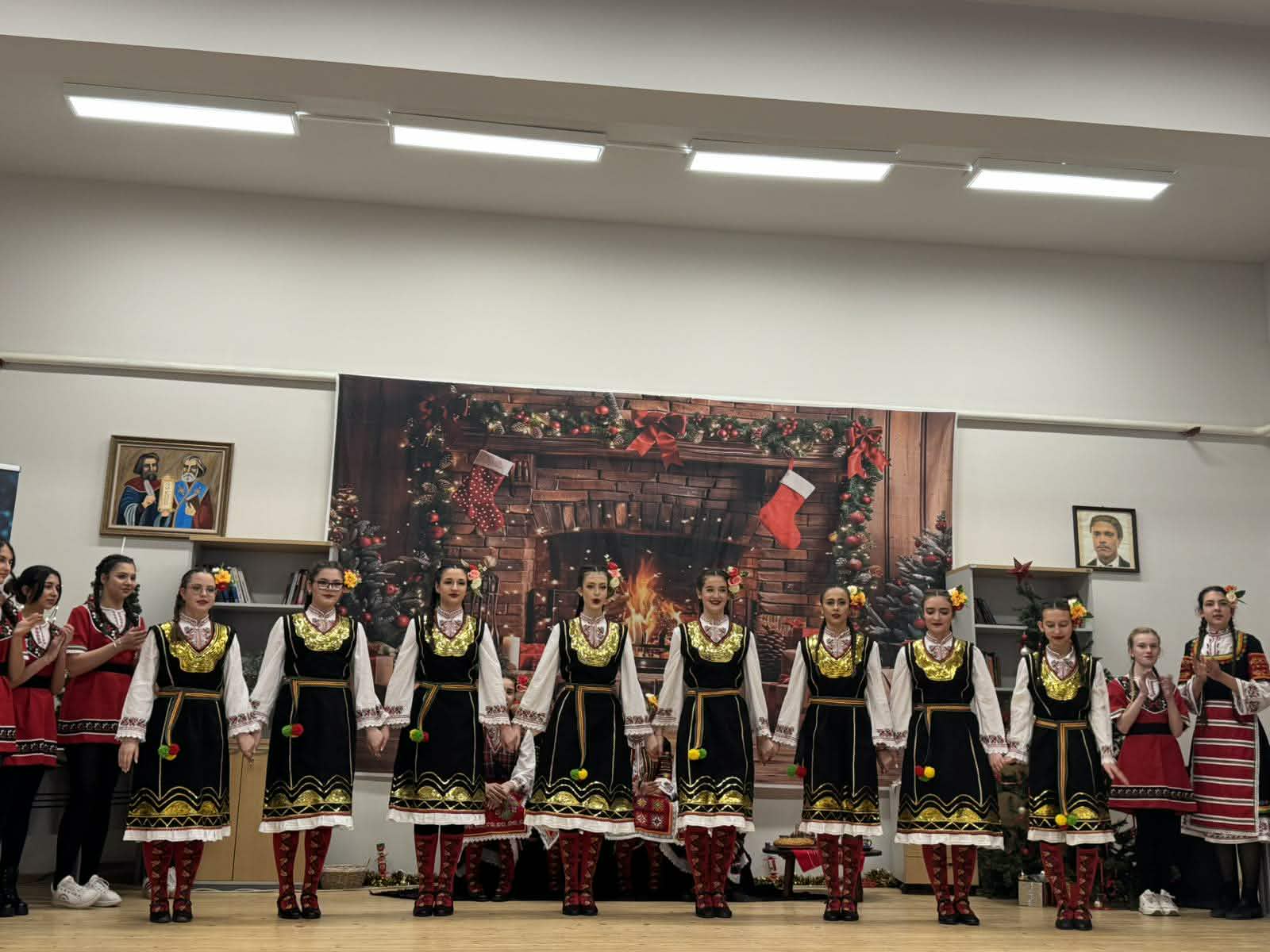
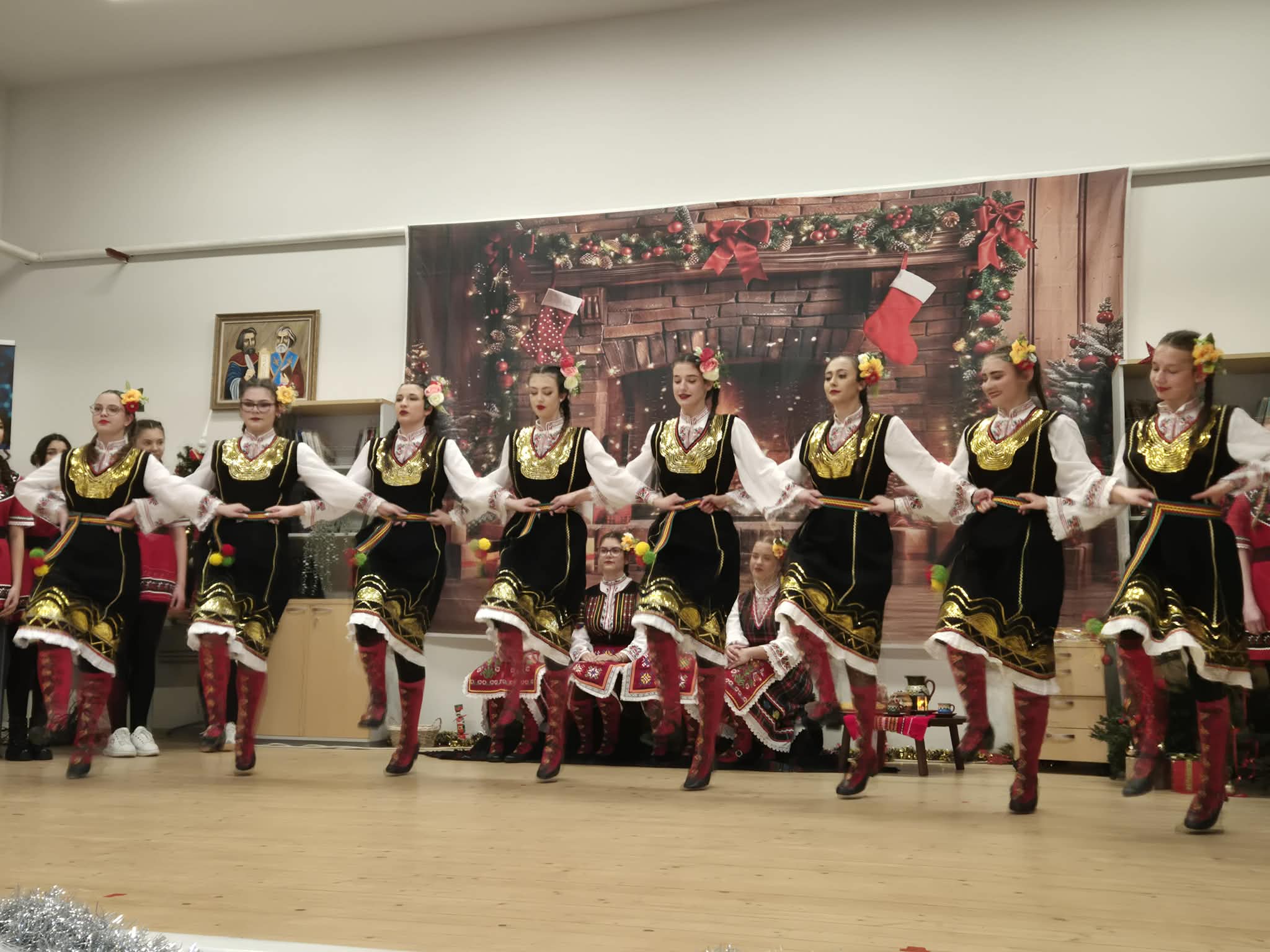
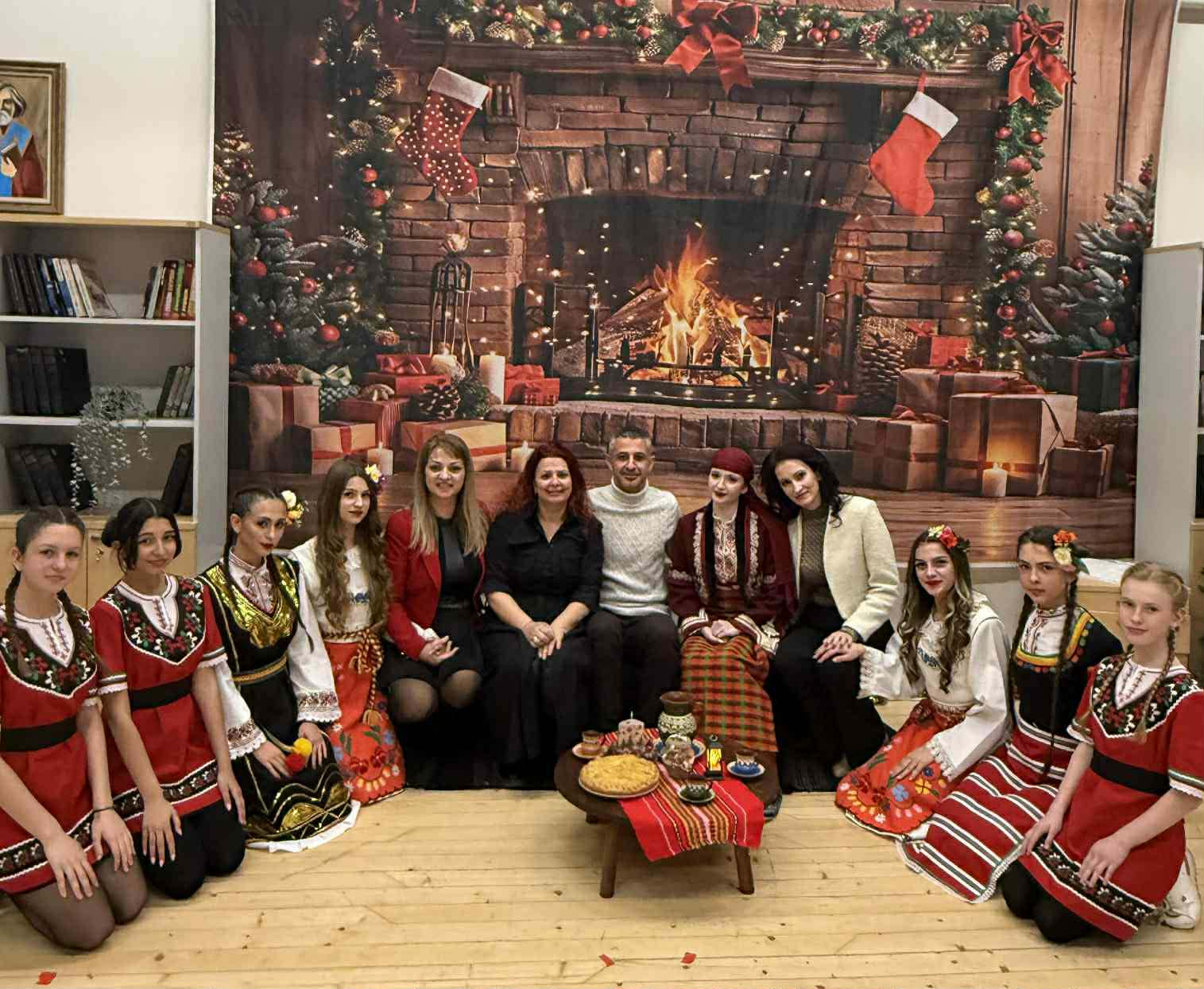
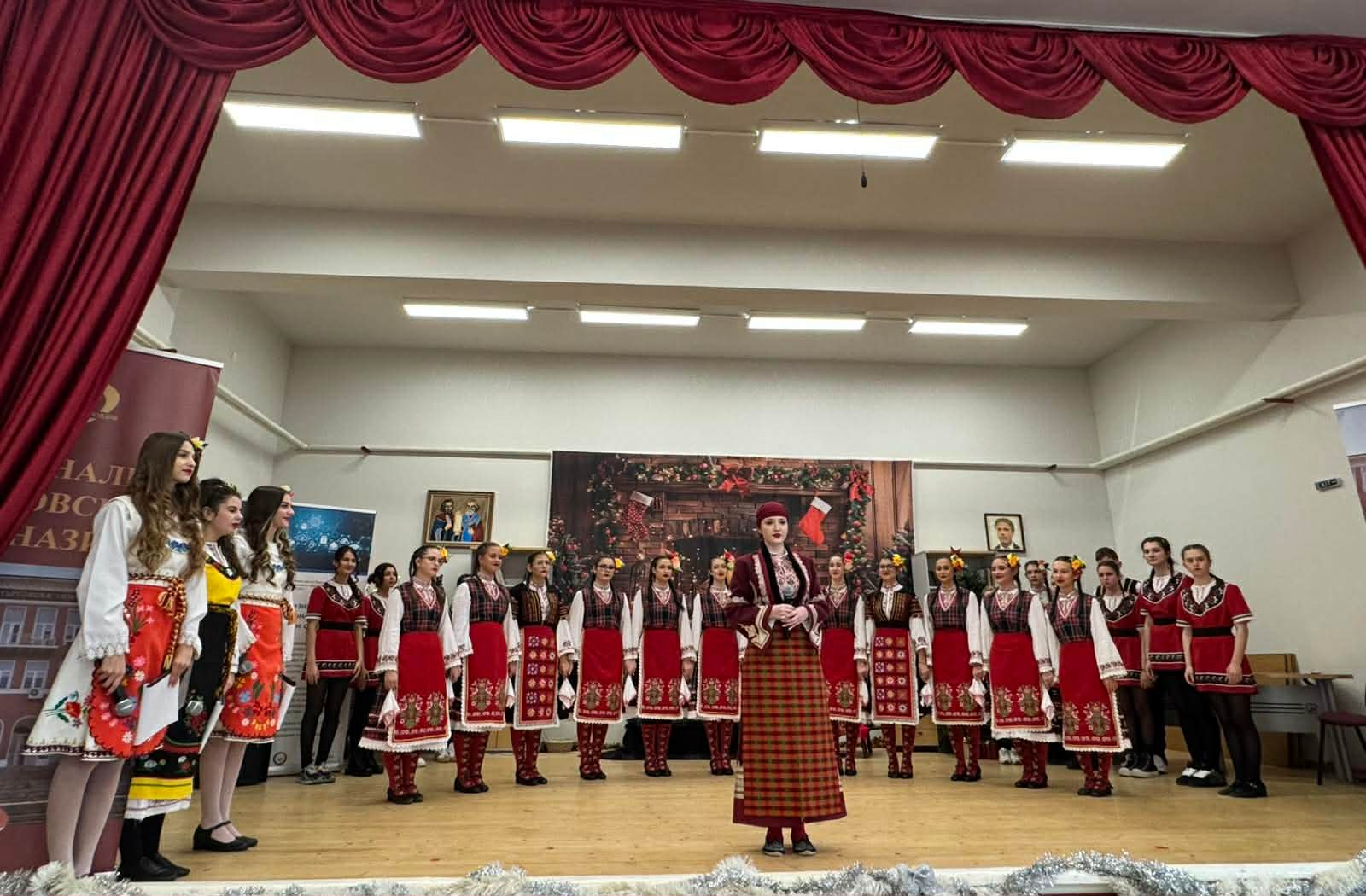
Strong student participation, stage presence, and meaningful content marked the "Bulgarian Christmas" celebration organized by NTG students. The specialty "Public Relations, Communications, and Journalism," led by Ms. Iskra Koycheva, and the "Bulgarian Folk Dances" club, led by Ms. Silvia Stoyanova, took part in preparation and delivery.
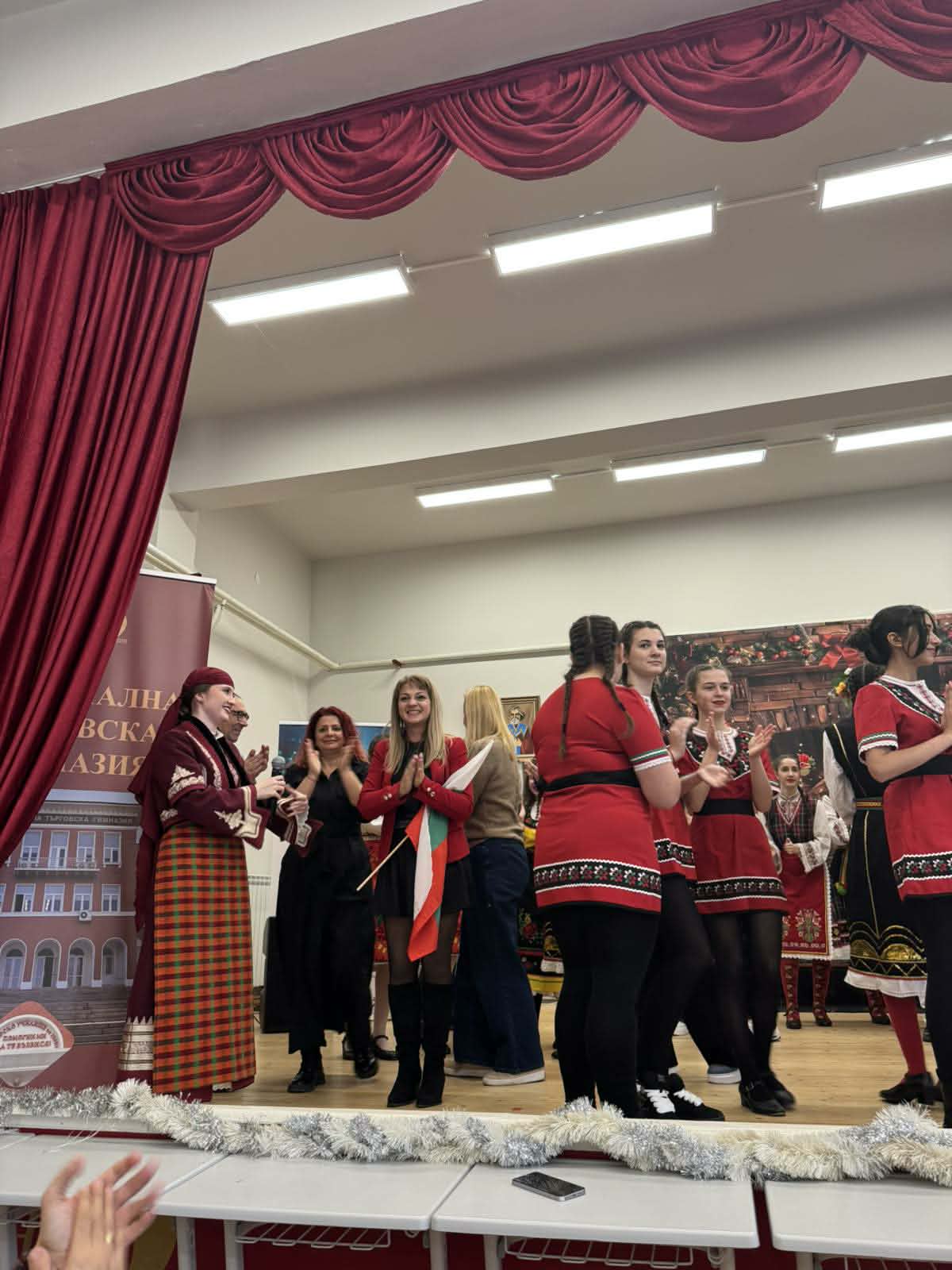
The event filled the hall and was welcomed with interest and excitement by students, teachers, and guests. The hosts moved smoothly between historical notes, literary text, and emotional messages, creating a steady rhythm and a coherent program line.
The celebration was dedicated to Dr. Petya Gerasimova—the school's former director, a respected teacher, and a personality with a strong presence. The tribute to her was expressed with measured words and genuine respect woven into the spirit of the entire event.
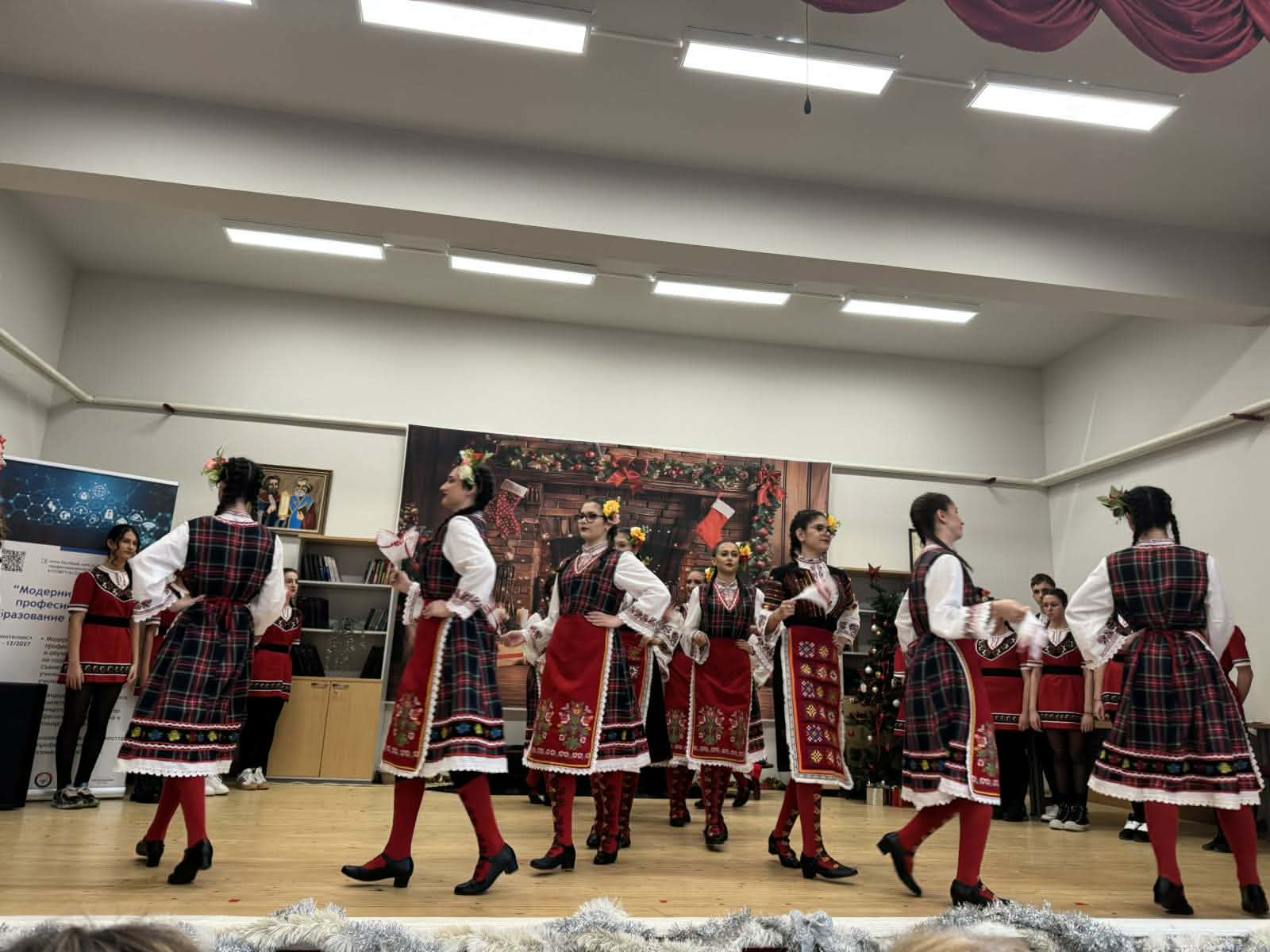
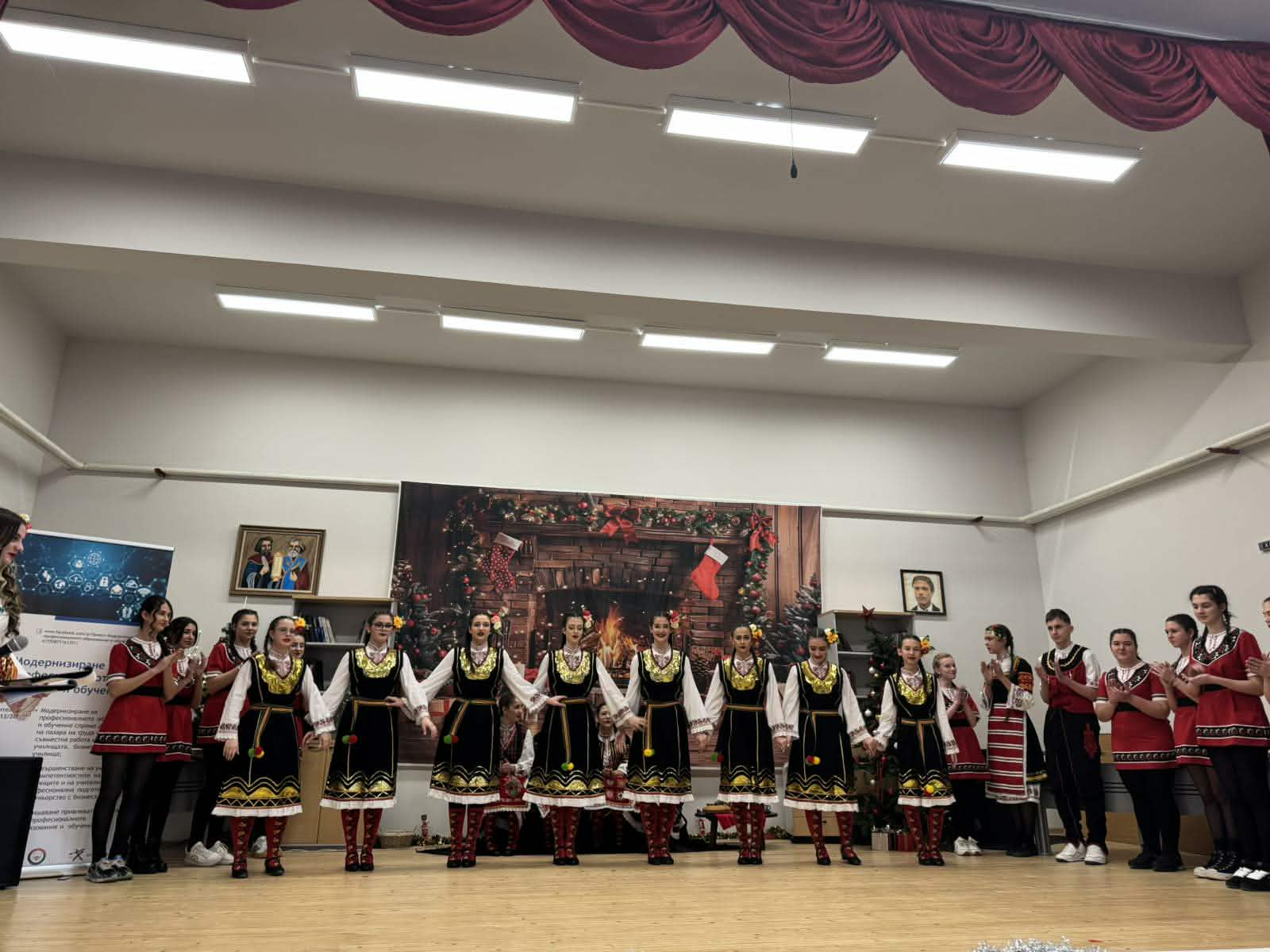
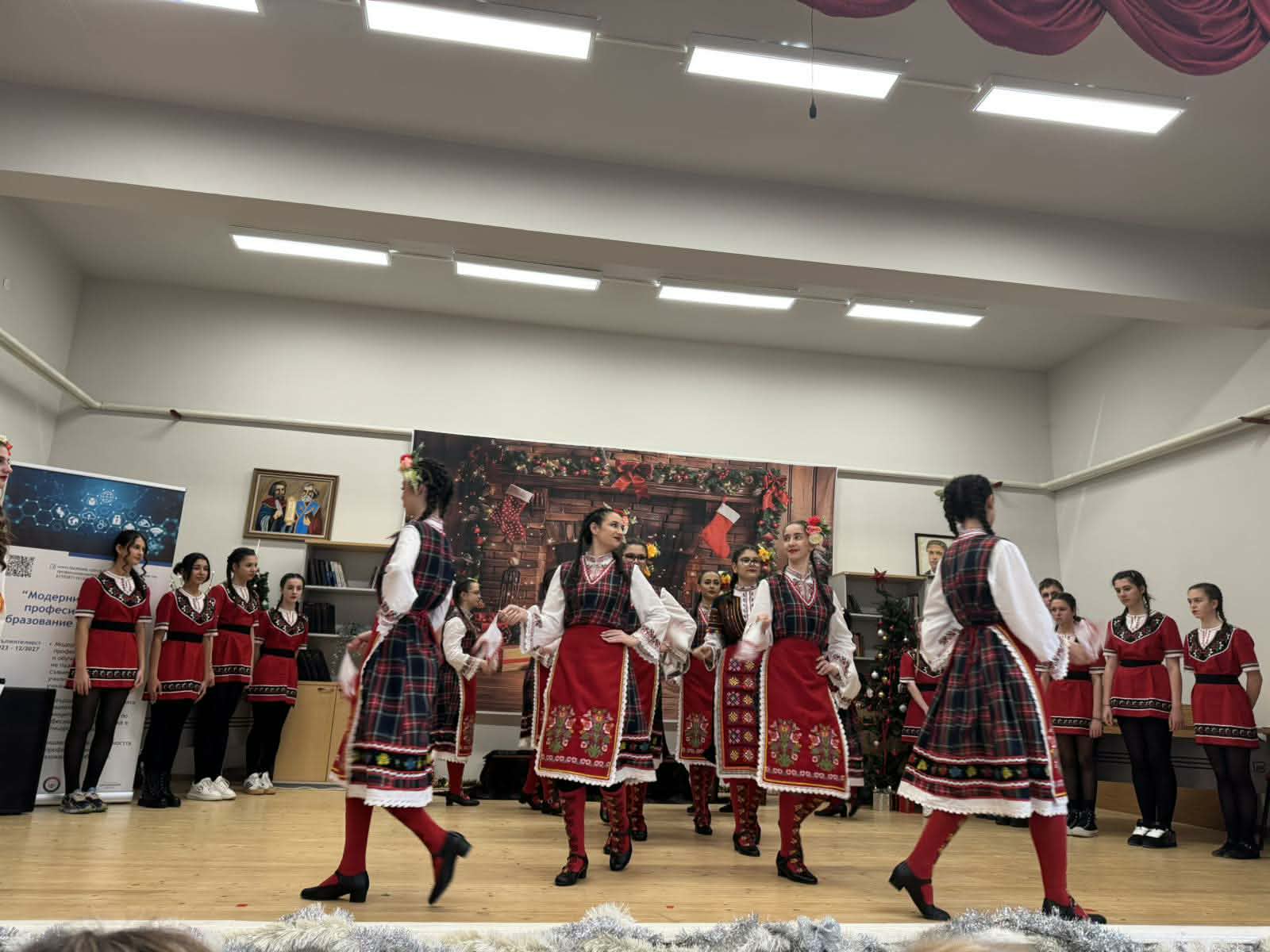
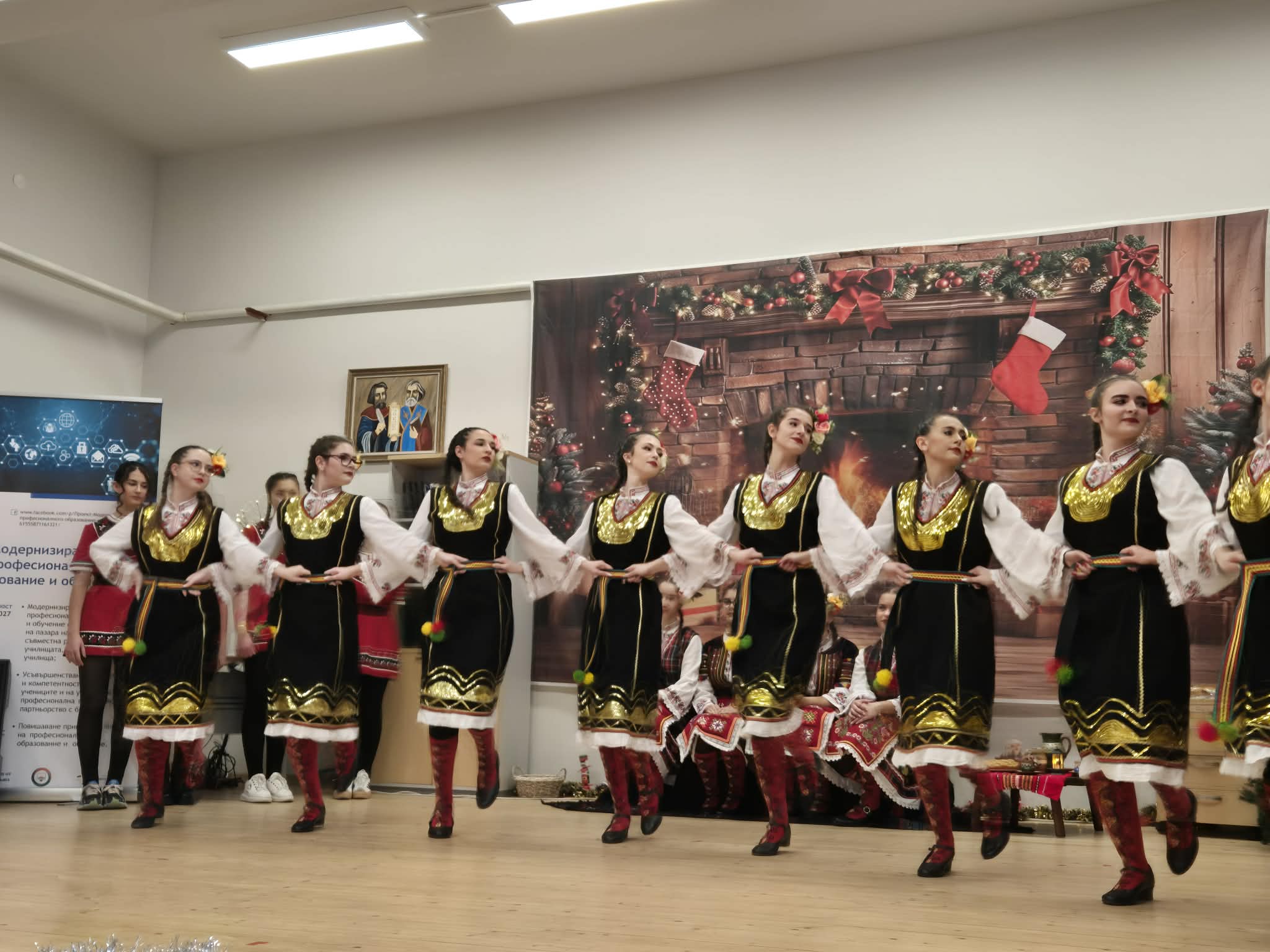
The "Bulgarian Christmas" program traced the winter holidays in the Bulgarian folk calendar—from Dimitrovden and Nikulden, through Ignazhden, to Christmas. Every dance and scene carried the character of its region—from Pirin's heavy rhythm, through the softness of the Rhodope, to the fiery energy of Shopluk.
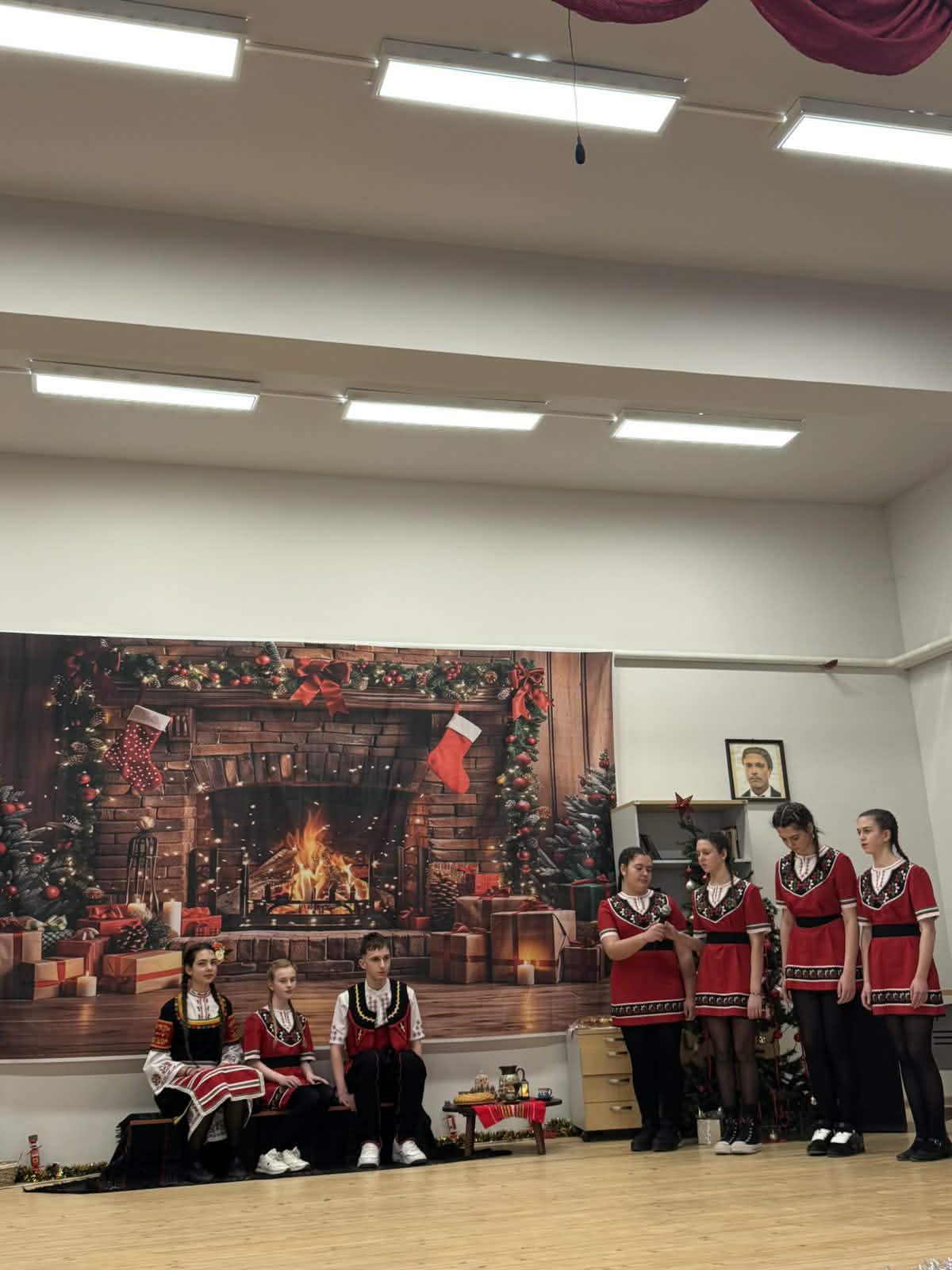
The stage vignettes were rich in authentic lines, folk blessings, and symbolism. The "Sedanka" sketch, performed with humor and restraint, and the women's Shop dance "Za poyas" left a strong impression—dynamic, precise, and memorable.
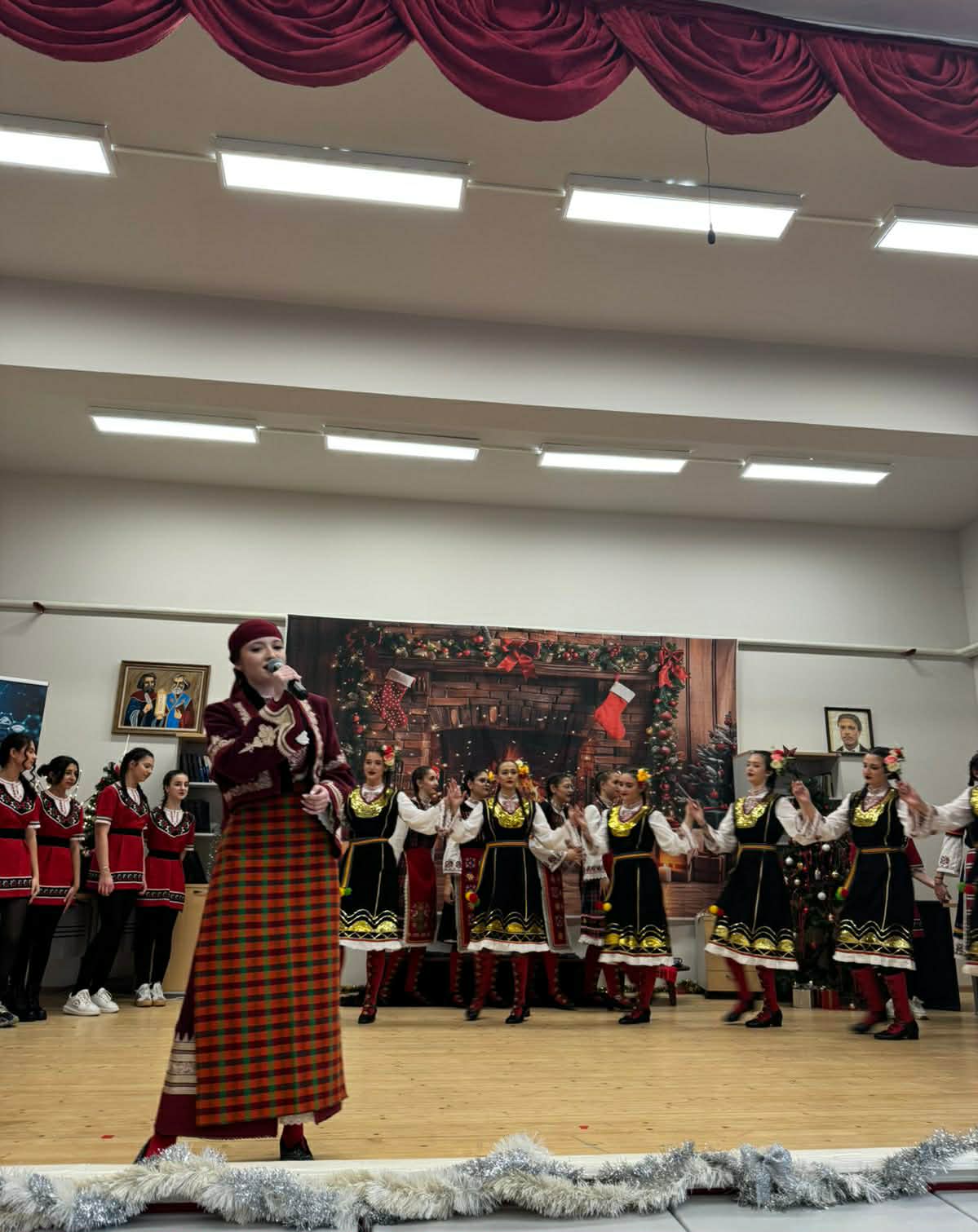
Special guest was Denitsa Cholakova from the "Sts. Cyril and Methodius" Humanities High School—a winner of numerous musical awards. She performed three songs, received with great delight and warm applause.
The natural finale was a chain dance that brought teachers and students together to Denitsa's medley—one rhythm uniting generations and viewpoints.
"Bulgarian Christmas" was not just a program, but an experience built with taste, stage culture, and respect for the meaning behind every move and word. The students did not present folklore as something distant—they showed it as something alive, close, and meaningful.
The celebration showed that in today's digital and fast-paced world, the link to tradition is not outdated, but necessary. Through it, values that never age are passed on—belonging, respect, and continuity. When such themes are delivered with measure and personal commitment, they reach deeper and purer than any modern message.